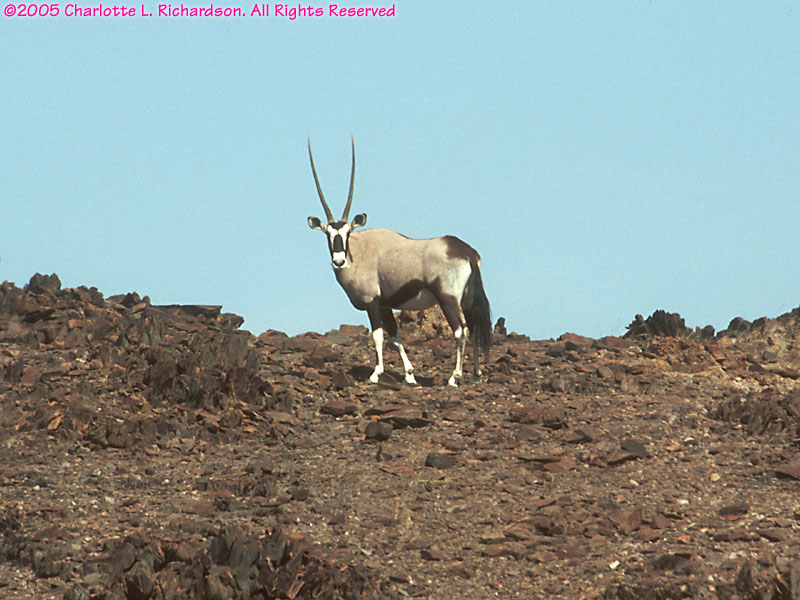

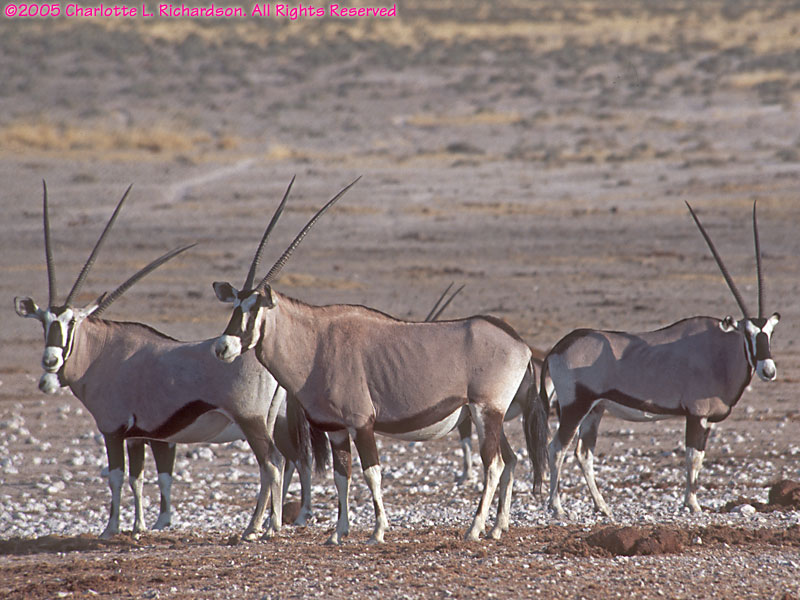

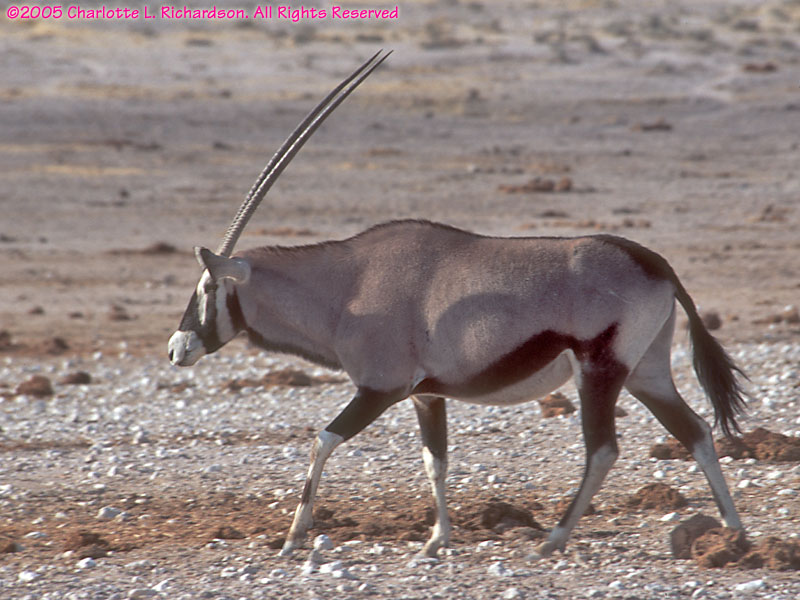
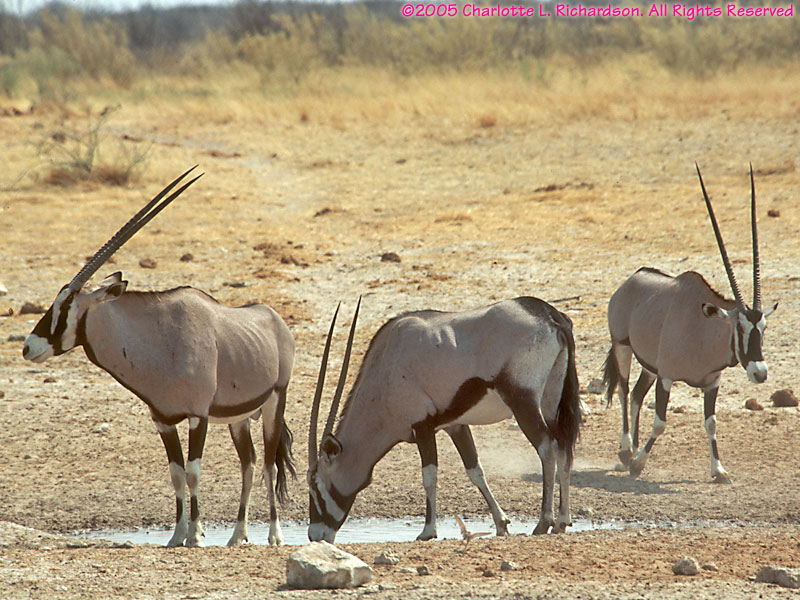
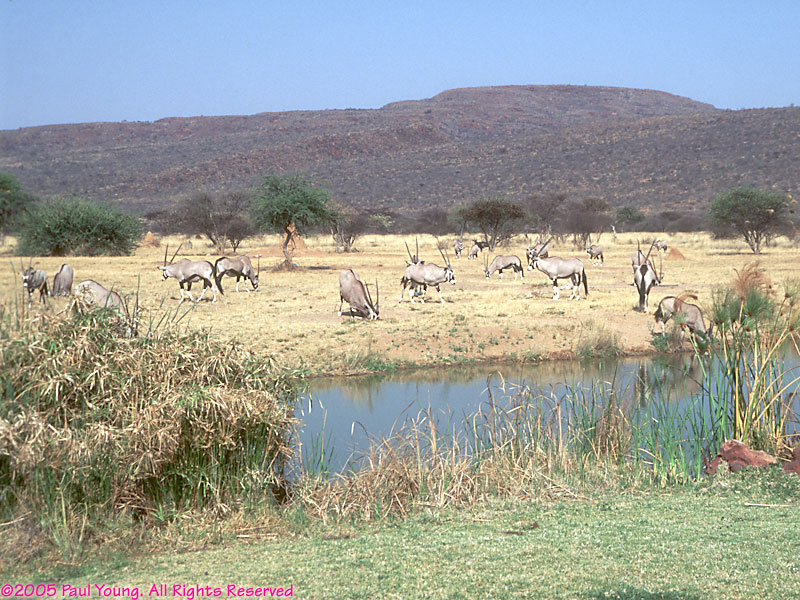
Oryx (gemsbok) (Oryx gazella)
Oryxes are large, strong horse antelopes adapted for waterless desert wastelands uninhabitable by most large mammals. They can survive extreme heat by allowing their body temperature to rise. They drink water when it is available but can get by on moisture from their food.
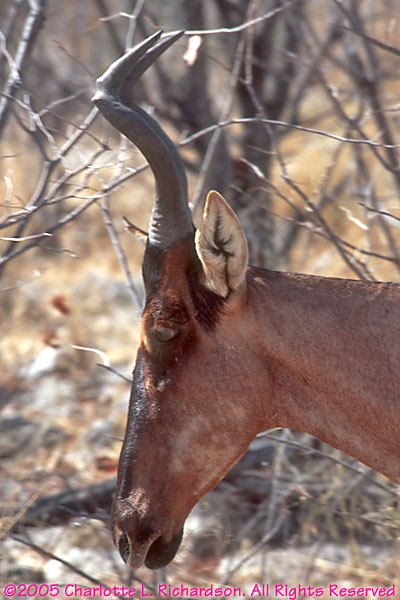
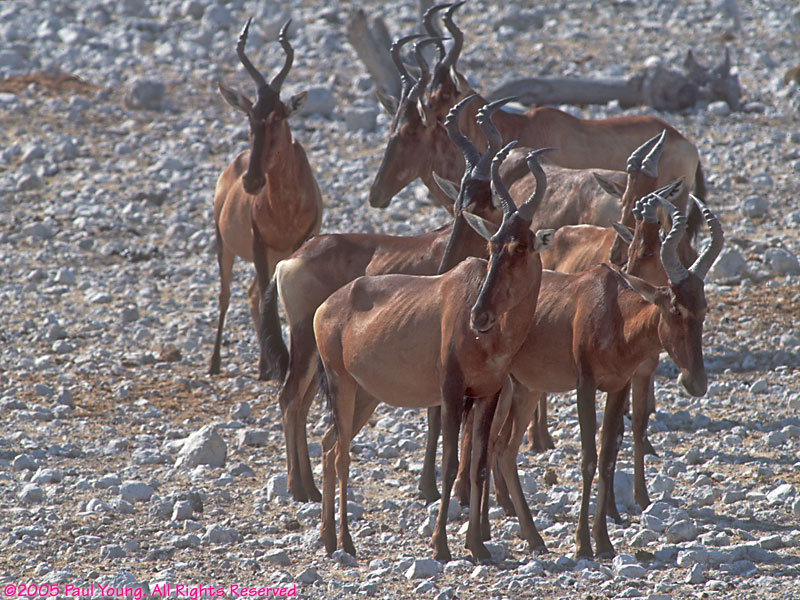
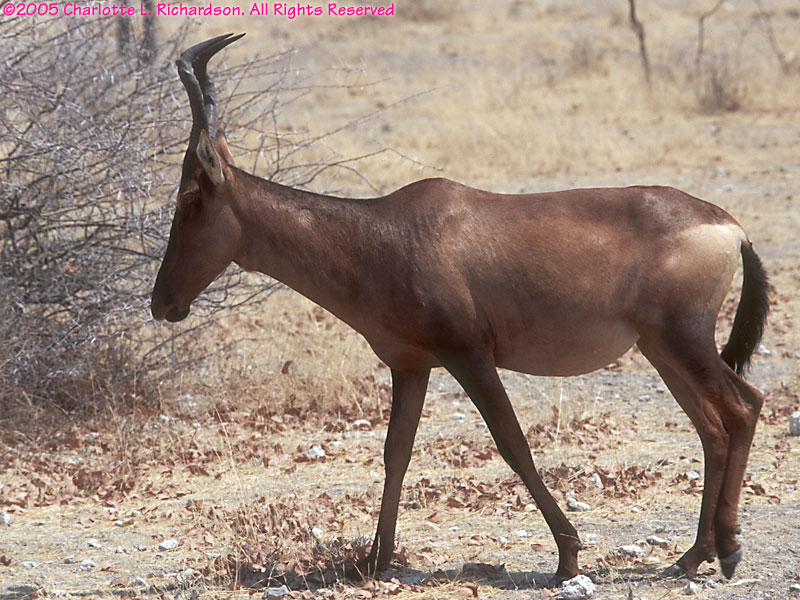
Red hartebeest (Alcelaphus buselaphus caama)
A tall slender reddish antelope with bracket-shaped horns, red hartebeests live on the edge of open plains.
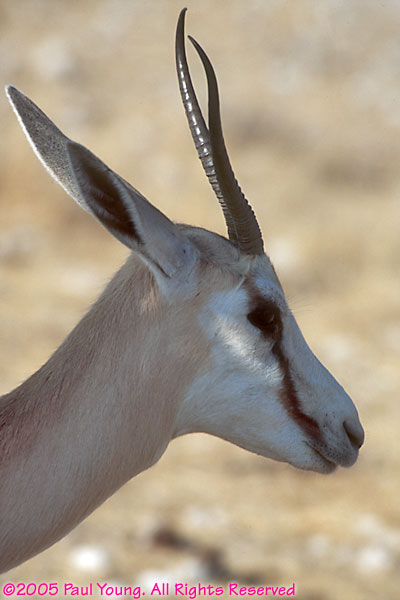
Springbok (Antidorcas marsupialis)
The springbok, a gazelle, is the most common antelope in Namibia. The live in both desert and savanna areas.

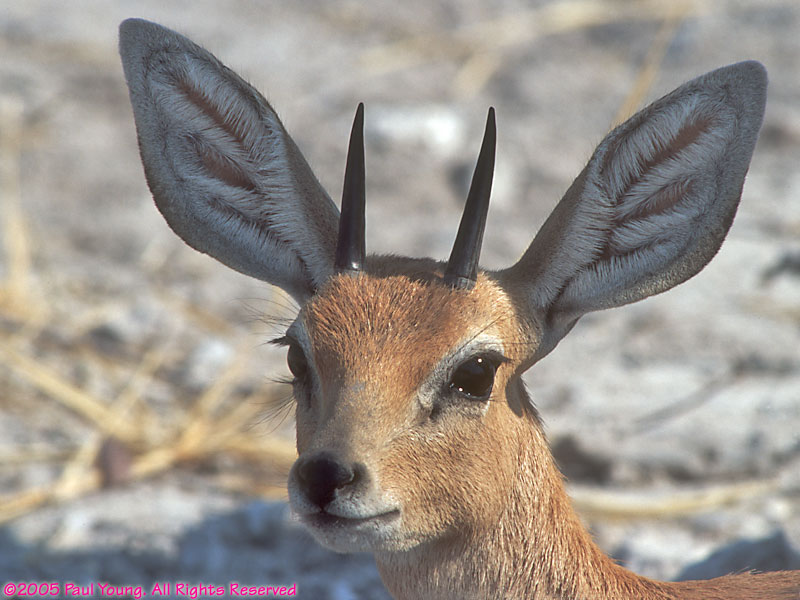
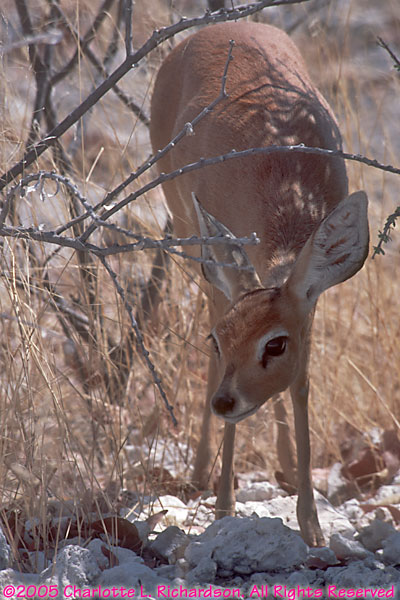
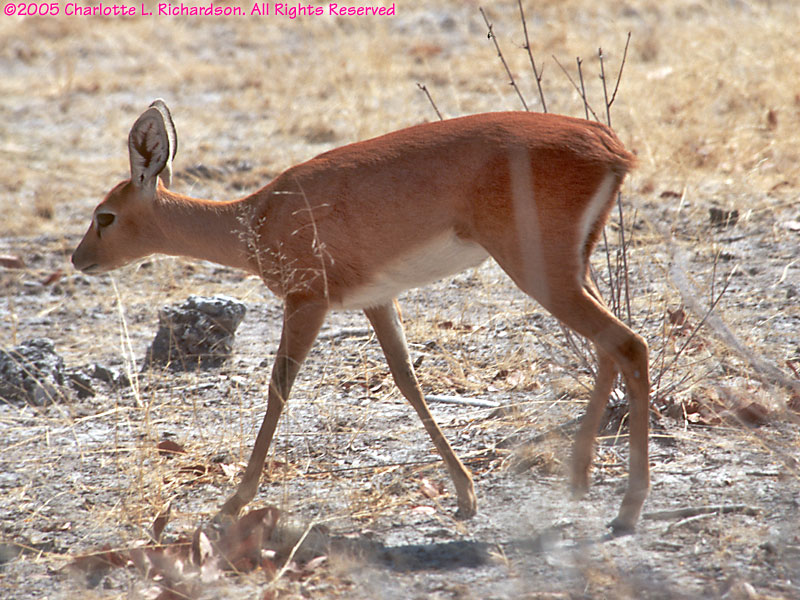
Steenbok (Raphicerus campestris)
Steenboks, a dwarf antelope, inhabit the acacia savanna.
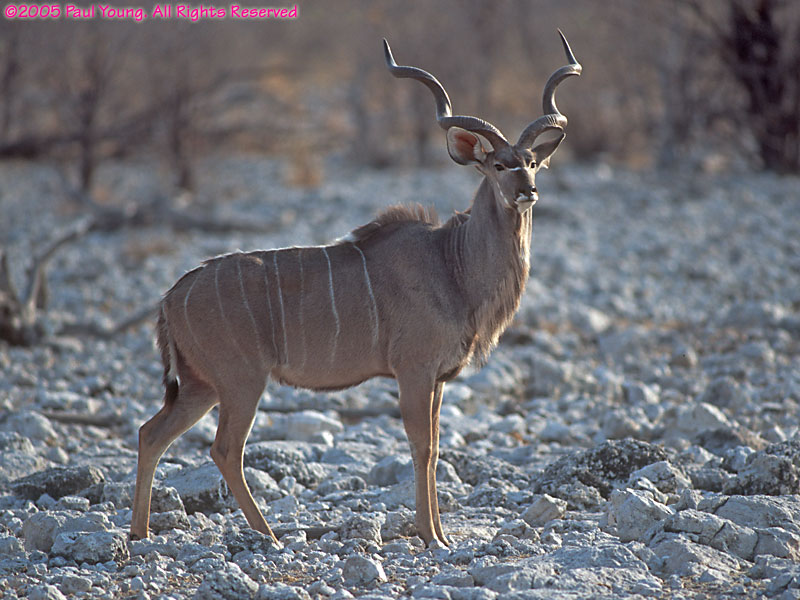
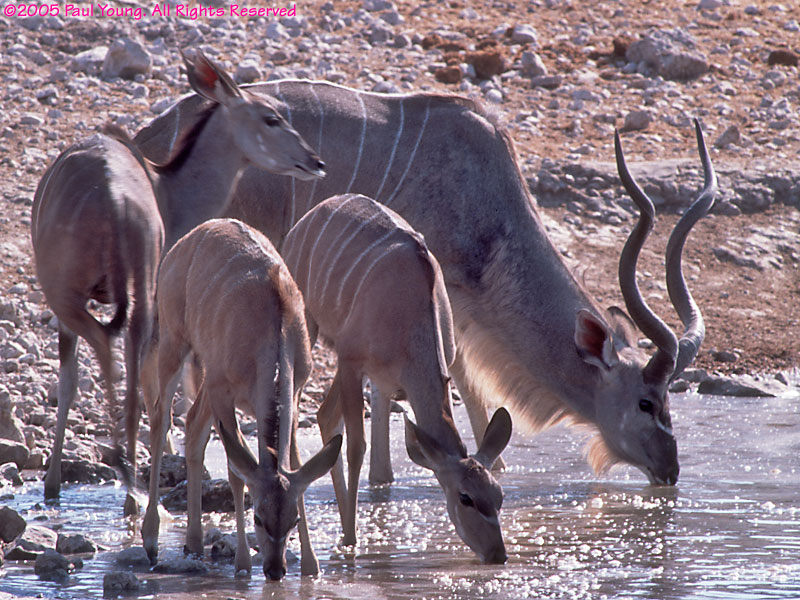
Greater kudu (Tragelaphus strepsiceros)
This large bushbuck is the second-tallest antelope. The males have spectacular horns. Greater kudu live in scrub woodlands and bush.
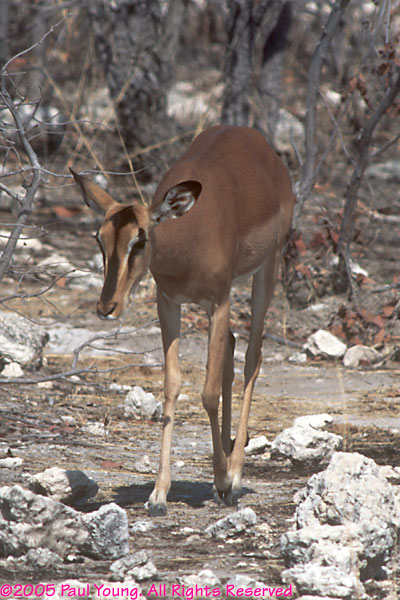
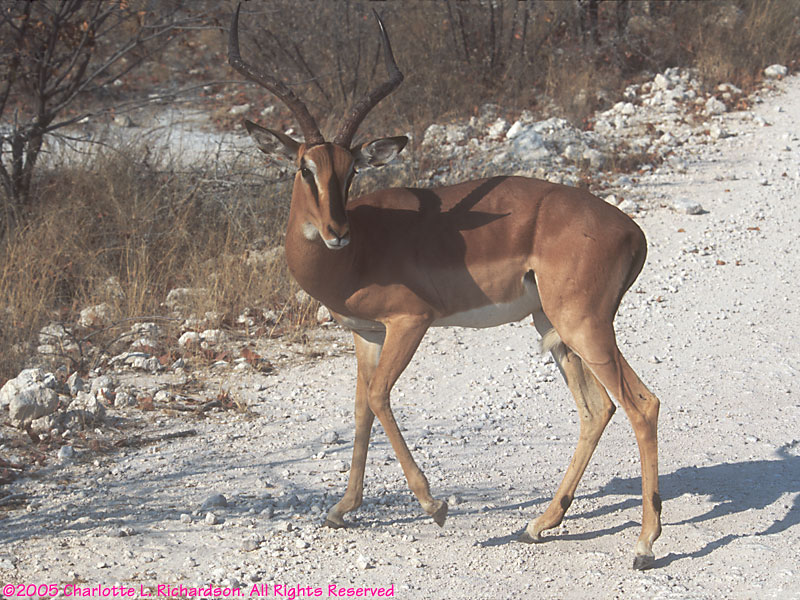
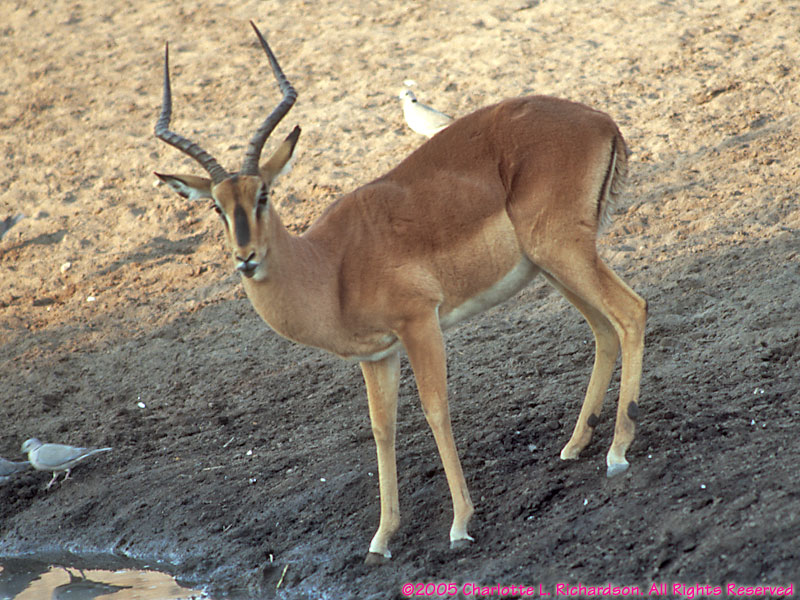
Black-faced impala (Aepyceros melampus petersi)
Impalas are not closely related to any other antelope. The black-faced subspecies is endemic to the edge of the Etosha salt pan.
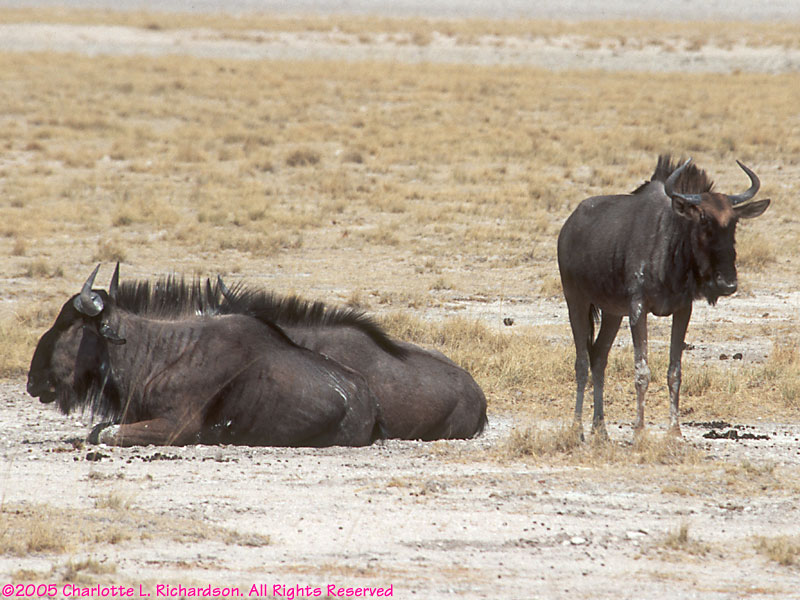
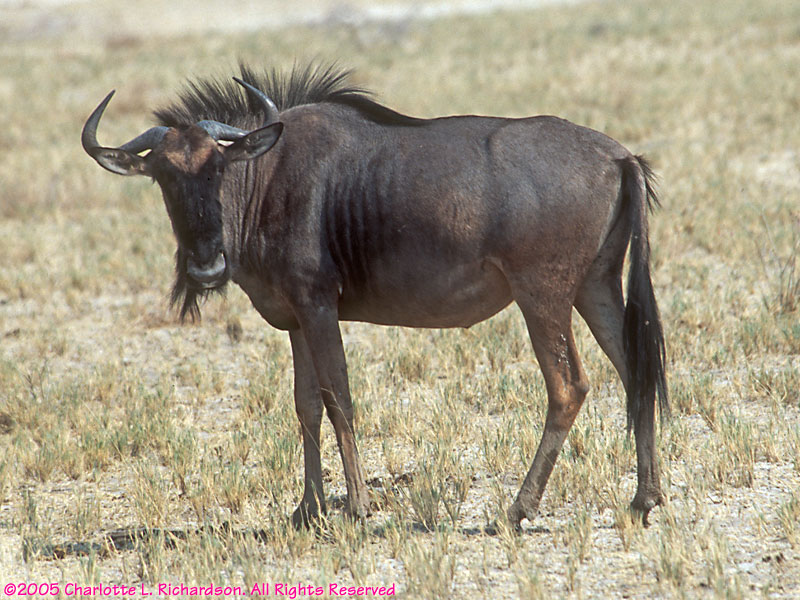
Blue wildebeest (Connochaetes taurinus)
Also called the brindled gnu, the blue wildebeest is found in the eastern part of Etosha. These animals need to drink every day or two and so are not found far from waterholes.
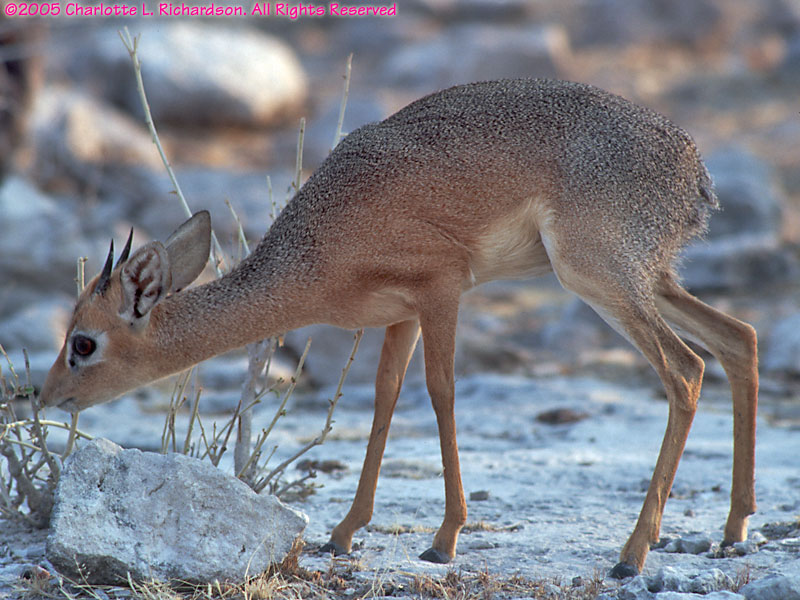
Damara dikdik (Madoqua kirkii damarensis)
Dikdiks are tiny dwarf anelopes with a mobile, pointed snout and very large eyes. The Damara subspecies is endemic to Namibia. They are found in eastern Etosha in scrubby woodland areas. They do not require water to drink, can tolerate very hot temperatures, and are very skittish.
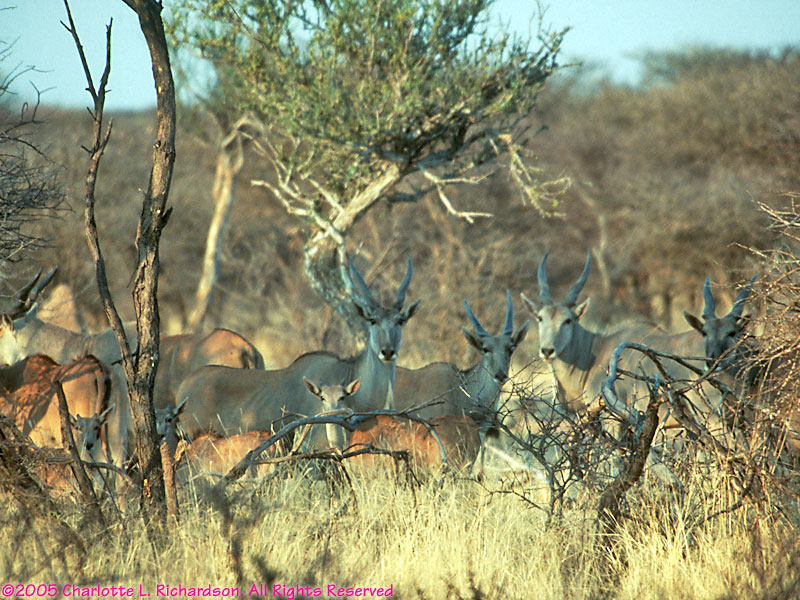
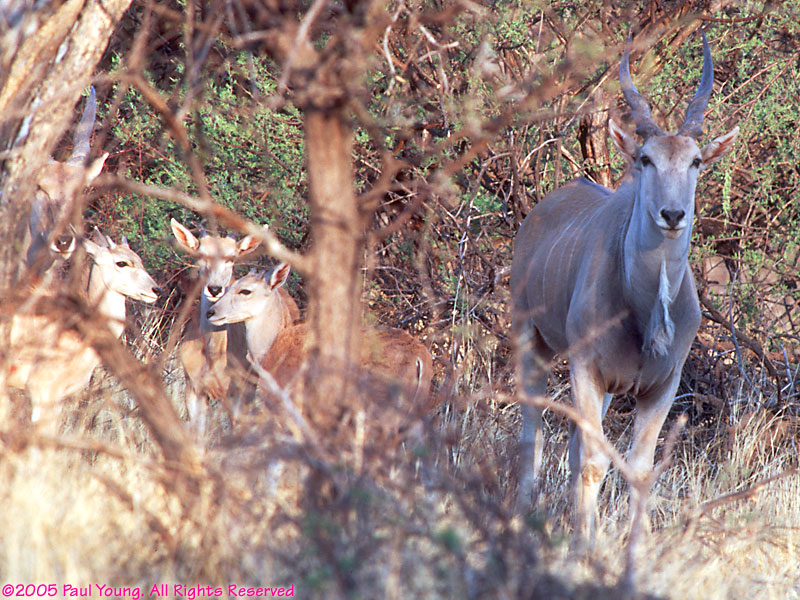
Eland (Taurotragus oryx)
Elands, a bushbuck, are the largest African antelopes, but they are surprisingly skittish.

Back to Namibia Photo Gallery Back to home page
©2005, 2015, 2019 Mermaid Underwater Photographic. All Rights Reserved.
Contact us at mermaid@underwater.org.
Last modified 4 November 2019