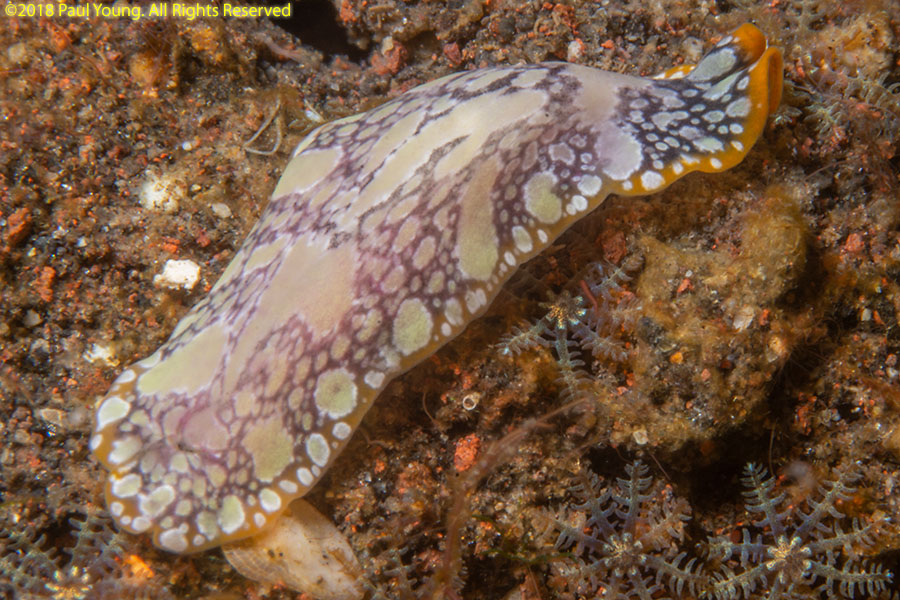
 Brilliant flatworm, Pseudoceros scintillatus
Worms:
Polyclad flatworms are the most primitive animals with bilateral symmetry, a definite front and rear section, and a dorsal and ventral surface. They have a single body opening on their ventral surface. Most reef species have pseudotentacles on their heads. Some have eye spots that can detect light.
Brilliant flatworm, Pseudoceros scintillatus
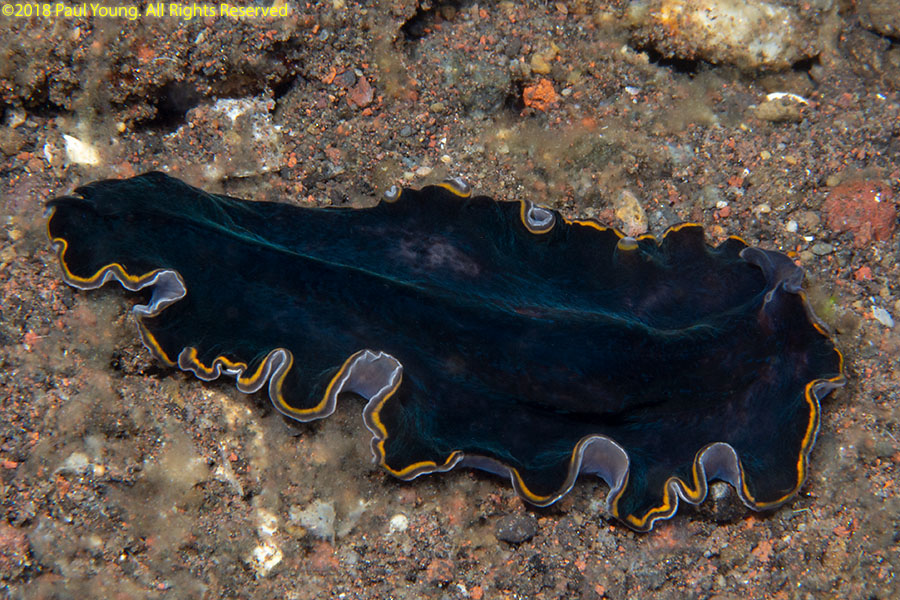 Pseudoceros sp.
Not actually flatworms, but often misidintified as blood-spotted flatworms, Euryptid sp.:
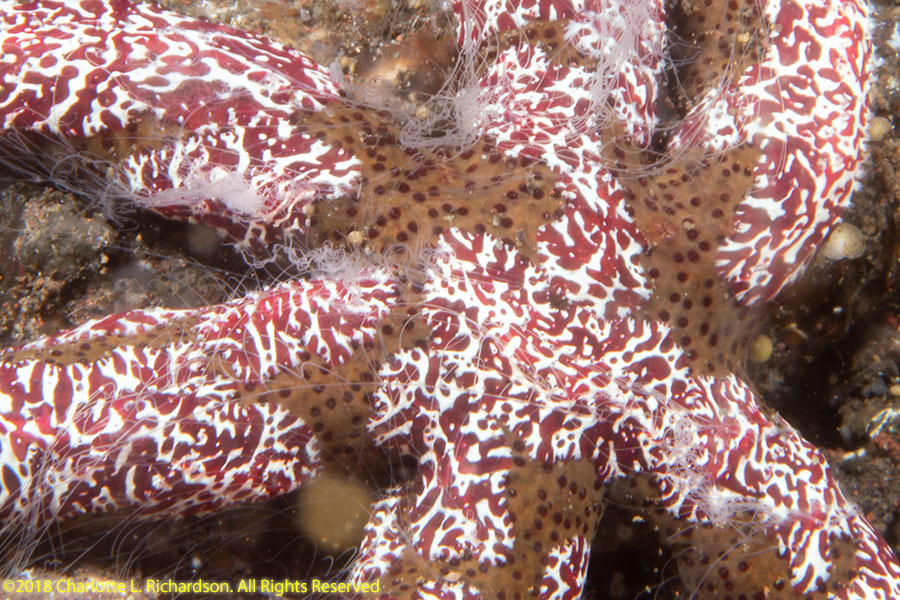 Commensal creeping comb jelly, Coeloplana astericola
Acoel (platyhelminth) flatworms are very simple soft-bodied animals, lacking even body cavities.
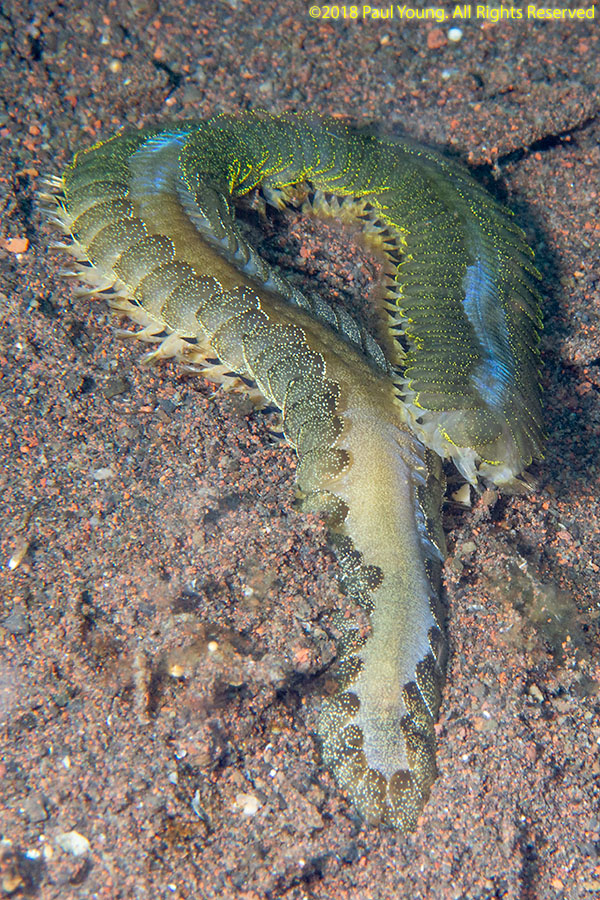
Scale worms have rows of rounded plates that cover their segments. Swollen tubercles often rise from the scales. Some species have small bundles of bristles extending from the bottom of segments.
 <TBS>
<TBS>
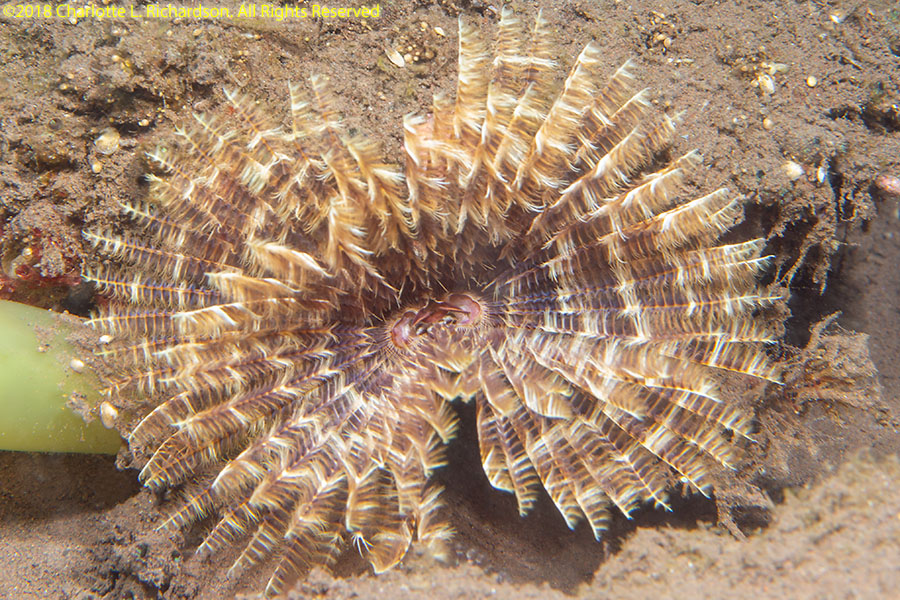
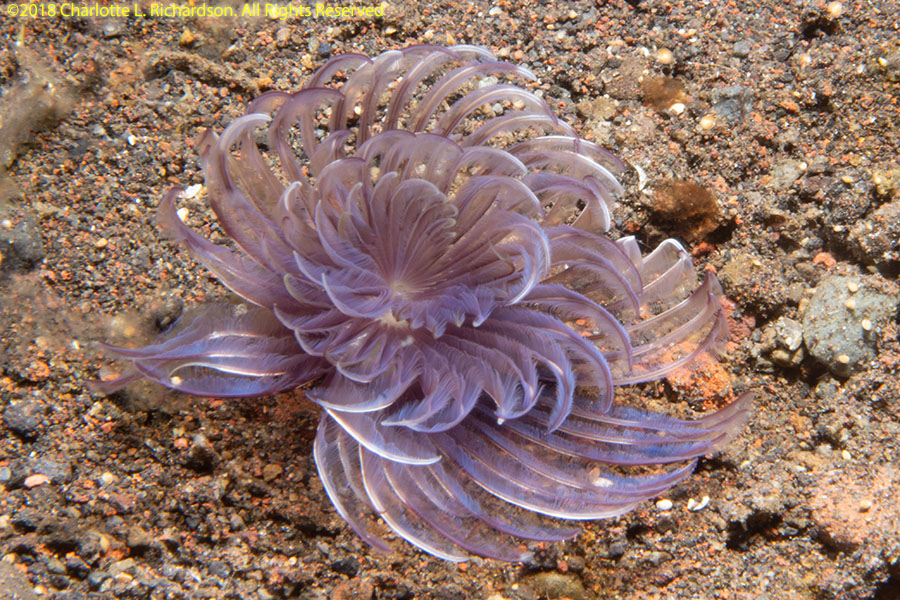
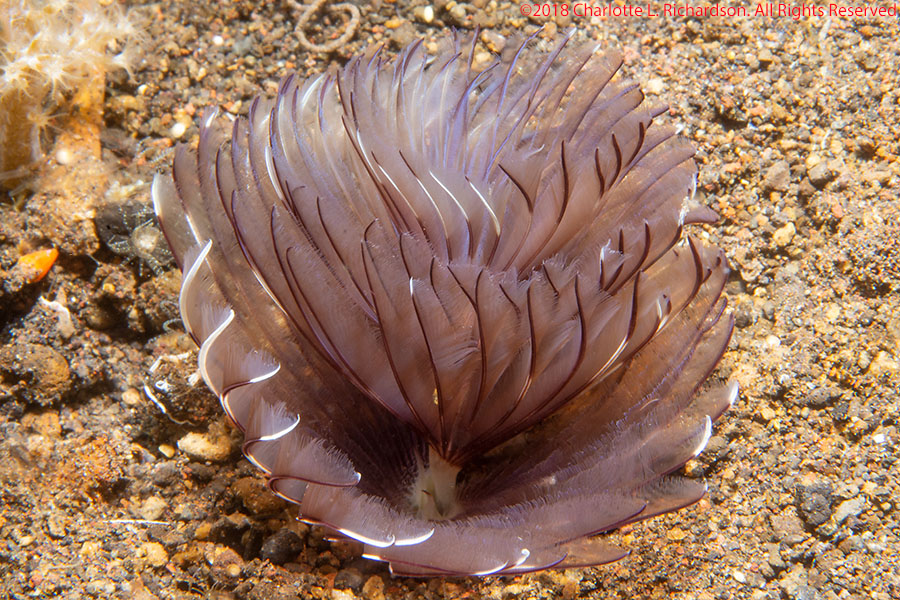
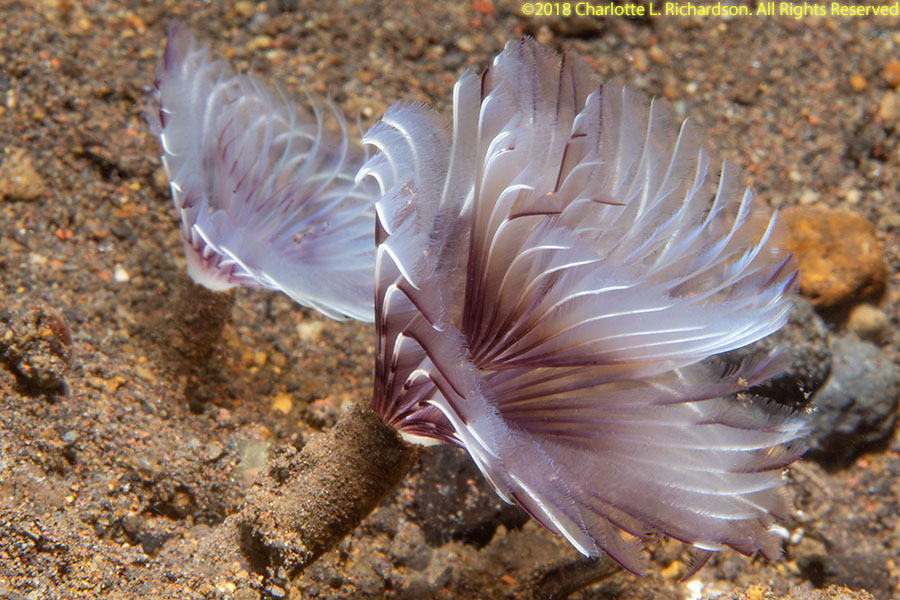
Feather duster worms (fanworms) hide their bodies inside parchmentlike sand-grain tubes with only their crown of featherlike gills exposed. The flexible tube is constructed of sand held tegether with mucus that is secreted by glands just below the head. Feather dusters are very sensitive to changes in light intensity and will instantly retract when closely approached.
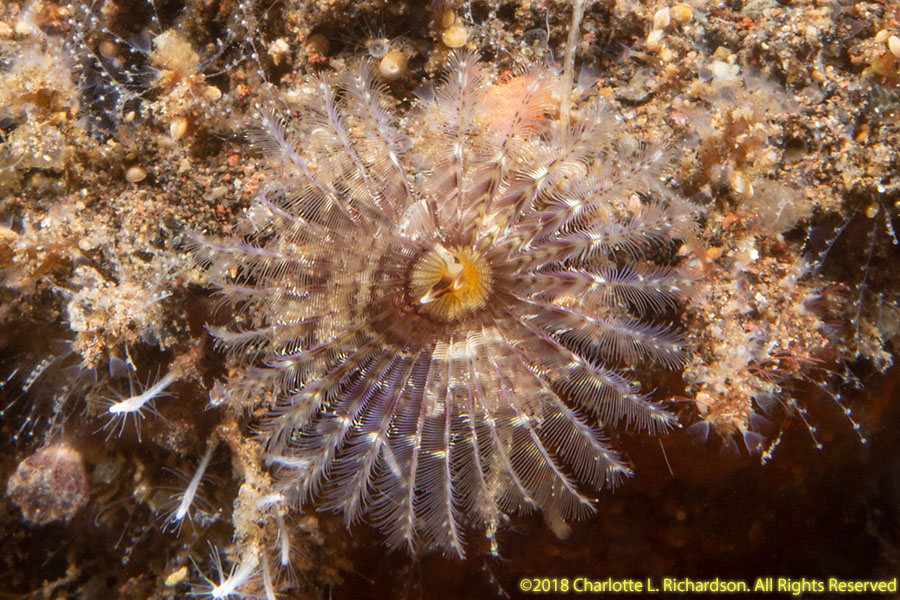 <TBS>
<TBS>
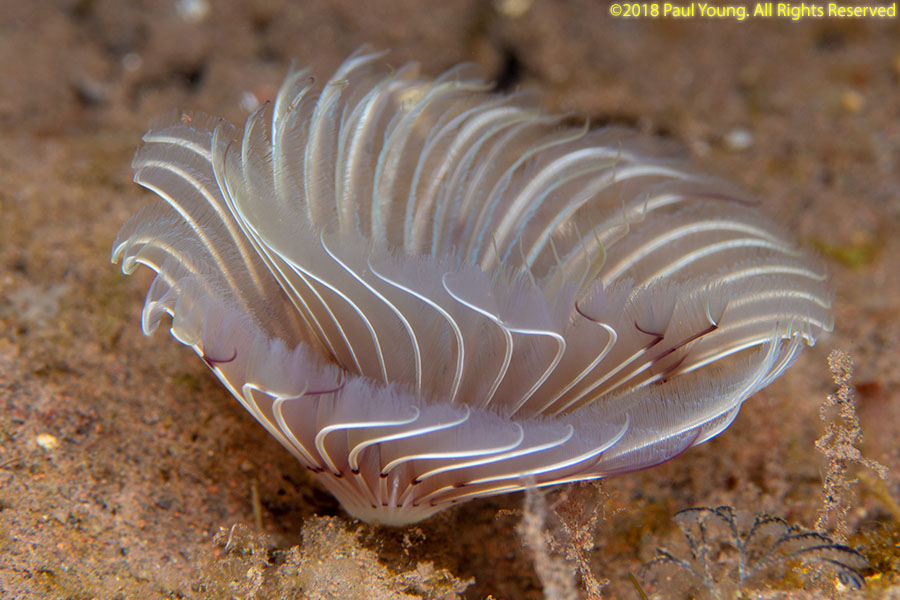
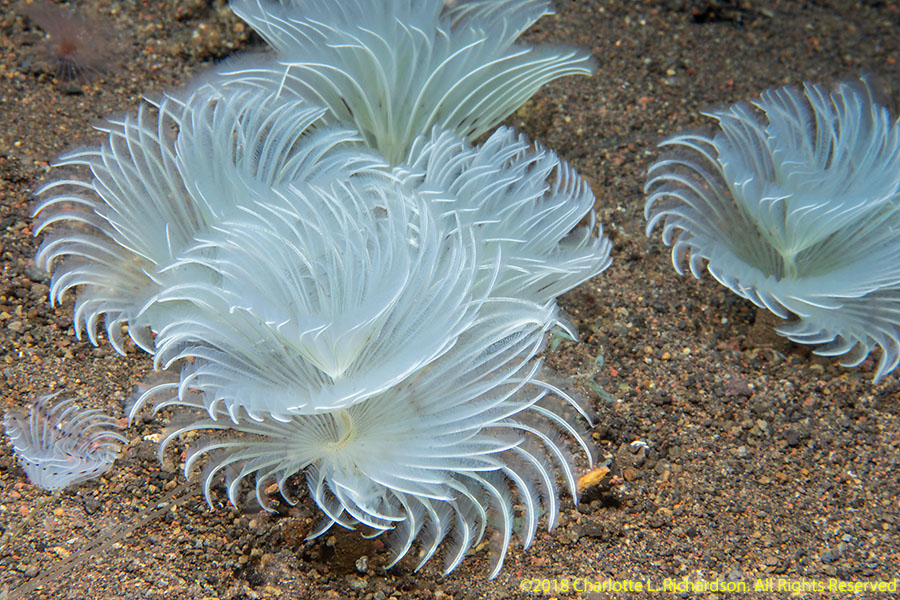 Bispira spp.
Fire worms have bundles of sharp, detachable sensory bristles on each segment for defense. These bristles can easily penetrate the skin and cause a painful irritation.
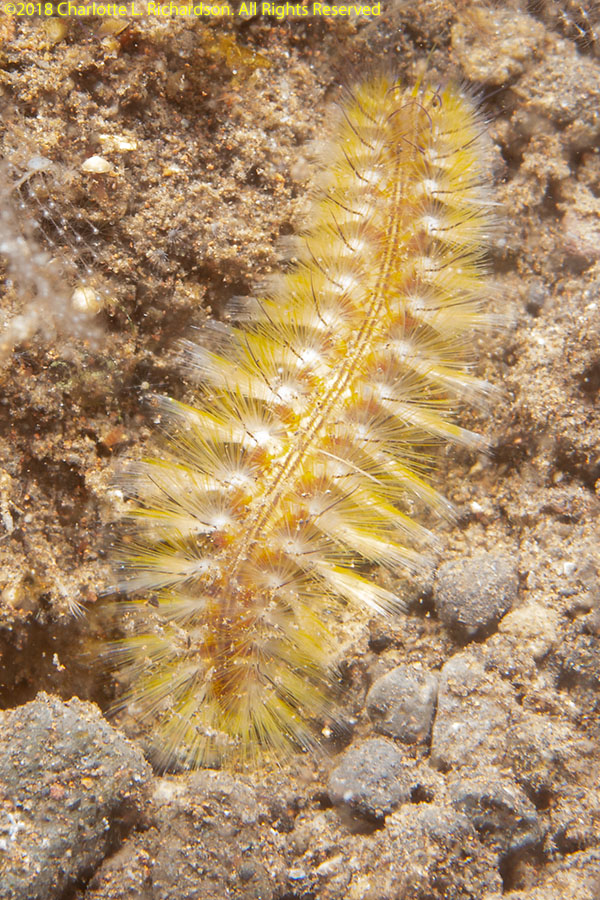 Darklined fire worm, Chloeia fusca
Spaghetti worms (terebellids) live in burrows or crevices. The numerous very long tentacles which radiate from near the mouth are used for finding and collecting food particles.
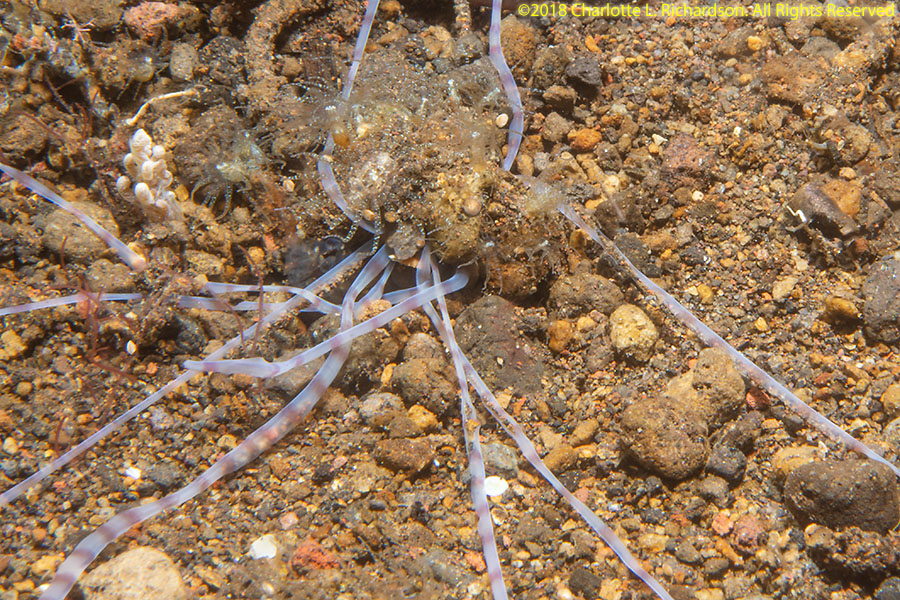 Spaghetti worm, Loimia medusa
©2019, 2024, 2025 Mermaid Underwater Photographic. All Rights Reserved.
Contact us at mermaid@underwater.org.
Last modified 10 December 2025